What is vibe coding?

Corbin Brown
5 min read
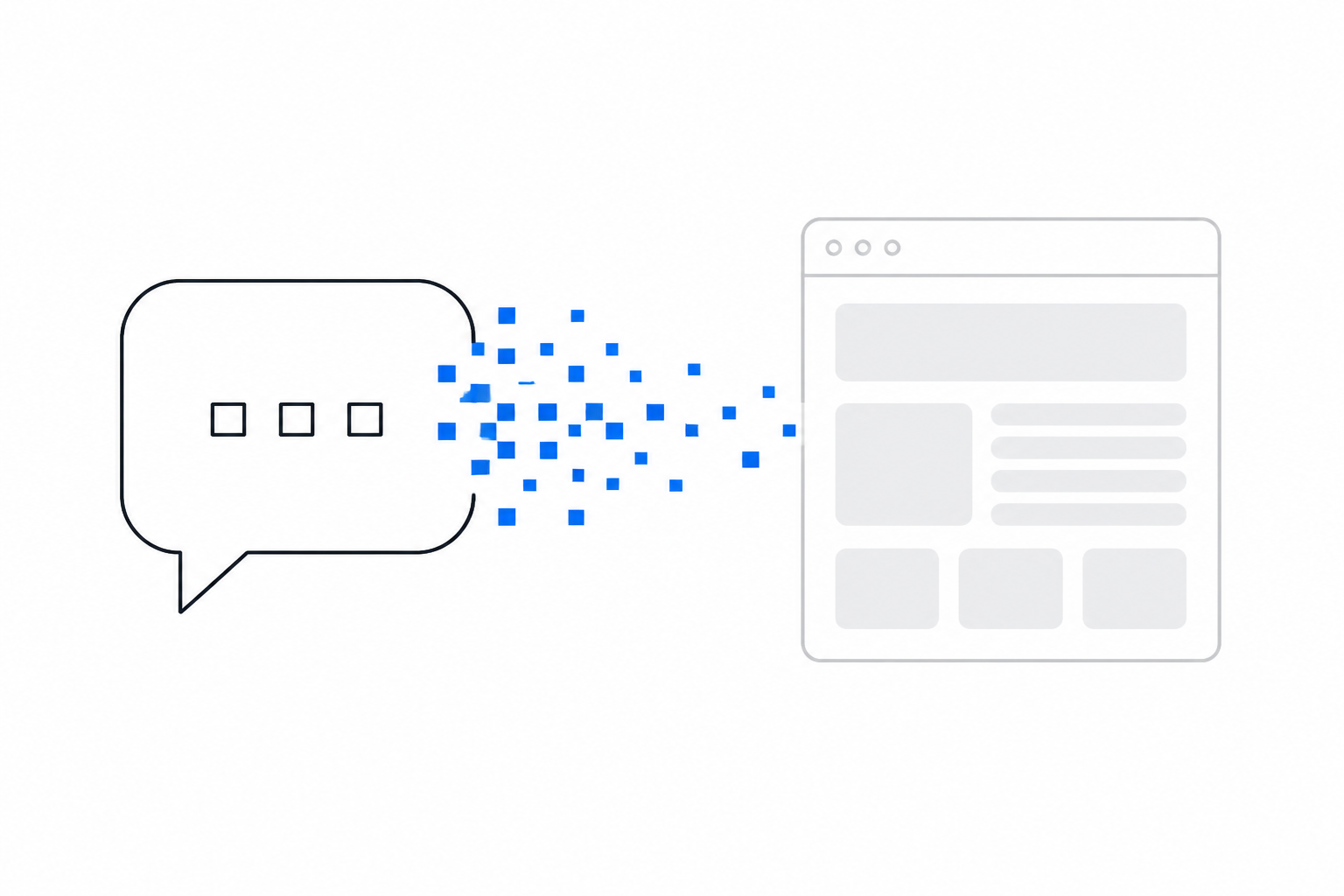
Vibe coding means building software by describing what you want in plain language and letting an AI coding agent write the actual code. You say “add a login page,” the AI writes the login page, you look at the result and say what to change next. You steer by feel (by vibe) instead of by typing code yourself.
The term stuck because it captures something real: for the first time, people who never learned to program are shipping working apps. And people who did learn to program are shipping five times faster. Both groups are doing the same thing: having a conversation with an AI that does the typing.
Where the term came from
Andrej Karpathy (a founding member of OpenAI and former AI director at Tesla) coined the phrase in early 2025. He described a new way of building where you “fully give in to the vibes”: talk to the AI, accept its changes, and barely look at the code. He meant it half as a joke about throwaway weekend projects. The internet took it seriously, because the workflow he described actually works.
What started as a meme became a method. Within a year, “vibe coding” went from a tweet to one of the fastest-growing search terms in software, tools reorganized their entire products around conversational building, and a wave of people with ideas (founders, marketers, designers, students) started shipping software without hiring anyone.
How vibe coding actually works
The workflow is a loop with four steps:
- 1Describe what you want in plain language. “Build a page where people can track their workouts.”
- 2The AI writes the code. Depending on the tool, it edits files in your project or builds the whole thing in the browser.
- 3You look at the result. Not the code: the actual running app. Does it do the thing?
- 4You say what to change. “Make the save button bigger. It should remember my last workout.” Repeat until it's right.
That's the whole method. The skill isn't syntax anymore. It's knowing what to ask for, in what order, and how to check what came back. The people who get good results treat the AI like a very fast contractor who takes everything literally: clear instructions in, working software out. Vague instructions in, plausible-looking mess out.
Why is it called vibe coding and not just AI coding?
Because the phrase describes the posture, not the technology. “AI-assisted coding” existed for years before this: autocomplete on steroids, a programmer still driving every line. Vibe coding flips who's driving. You judge the output by whether it feels right and works right, the way a producer judges a mix, without reading every line of what was written. The name is honest about that: you're going on vibes. Which is also exactly why it goes wrong without guardrails.
What goes wrong: the slop problem
Ask anyone who's vibe coded for more than a week and they'll describe the same failures. The AI rewrites a part of the app that already worked. It hardcodes a password into a file that ends up public. It builds a feature that ignores the way the rest of the project is structured. It confidently declares something fixed when it isn't. None of this means vibe coding is broken. It means the AI has no memory of your project, no caution, and no senior engineer looking over its shoulder.
We wrote up the honest case against vibe coding (and what actually fixes each criticism) in Is vibe coding bad? The short version: the failures are real, predictable, and preventable. They come from skipping the habits professional engineers use: planning before building, reviewing before shipping, writing down decisions. Those habits can ride along with the AI.
What do you need to start?
A tool and an idea. On the tool side there are two families. Agent-in-an-editor tools like Cursor and Claude Code work in a real code editor on your machine: more control, slightly steeper start. Browser builders like Replit handle the setup and hosting for you: fastest path from idea to a live link. We compared all the major options in Best vibe coding tools in 2026.
On the idea side, start with something you actually want to exist: a tracker, a calculator, a page for your business. Real motivation survives the frustrating moments; tutorial projects don't. If you want a concrete first project, how to vibe code a website walks through one start to finish.
FAQ
Do I need to know how to code to vibe code?
No. You need to be able to describe what you want clearly and check whether the result works. Knowing some code helps you debug faster, but people with zero programming background ship real, working apps this way every day.
Is vibe coding just for toy projects?
It started there, but no. Solo founders run real businesses on vibe-coded software. The difference between a toy and a product isn't who typed the code. It's whether anyone checked it for security holes and broken behavior before shipping. That checking step is skippable for toys and mandatory for products.
Will vibe coding replace programmers?
It replaces some typing, not the judgment. Someone still has to decide what to build, catch what the AI got wrong, and own the result. What's changed is who can do that: it no longer requires a computer science degree, just clear thinking and decent guardrails.
What's the difference between vibe coding and no-code?
No-code tools give you pre-built blocks you arrange inside their platform. You're limited to what the blocks can do and you rent the result. Vibe coding produces real code you own and can take anywhere. It's the difference between furnishing a rented apartment and owning the house.